LPG vs diesel forklift is the first question many buyers ask, and electric models add a third option. All three counterbalance types do the same basic job. However, what separates them is where they work, how long they run and what energy you can supply on site. This guide compares the three, so you can narrow the choice before you ask for a quote.
LPG vs diesel forklift: quick comparison
| Factor | LPG | Diesel | Electric |
|---|---|---|---|
| Best environment | Mixed indoor and outdoor work | Outdoor yards, heavy duty | Indoor, enclosed or mixed use |
| Exhaust at the machine | Cleaner than diesel | Highest of the three | None locally |
| Energy | LPG cylinder, swapped in minutes | Diesel, refuelled in minutes | Battery charging |
| Noise | Moderate | Higher | Low |
| Upfront infrastructure | Safe cylinder storage | Fuel storage | Charger and power supply |
| TKIFORCE range | LPG forklifts, 1.5 – 4.0 t | diesel forklifts, 2.5 – 42 t | electric forklifts, 1.5 – 12 t |
When an LPG forklift is the better fit
- Sites that move between indoor loading areas and outdoor yards in the same shift
- Operations that want cleaner exhaust than diesel without a charging area
- Shifts where a quick cylinder swap is better than waiting for a battery
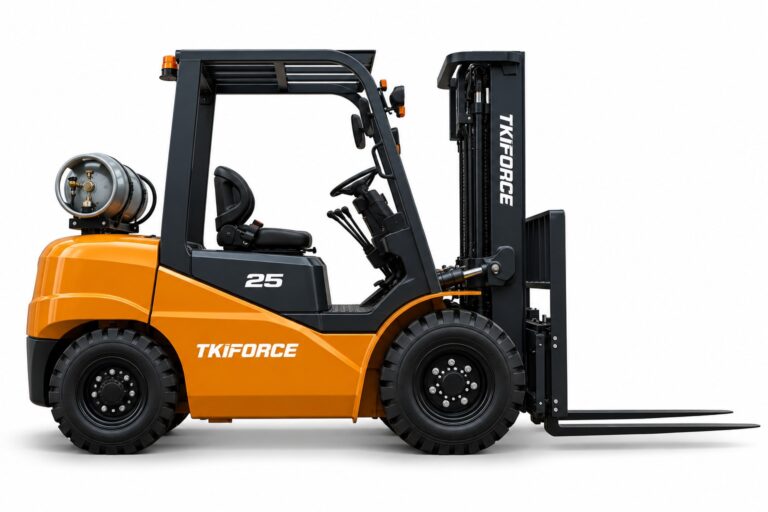
- Duty in the 1.5 to 4 ton range, the capacities of the TKIFORCE LPG K, H and T series
TKIFORCE LPG models list dual-fuel (LPG and gasoline) options. In addition, we confirm the engine and fuel configuration in your quotation.
LPG vs diesel forklift: when diesel is the better fit
- Mostly outdoor work in yards, ports, timber and building materials
- Heavy loads: diesel covers the widest capacity range, up to 42 tons in the TKIFORCE range
- Long continuous shifts with no charging window
- Rough ground and ramps where pneumatic tyres and torque matter
When an electric forklift is the better fit
- Food, pharmaceutical, retail and other indoor or enclosed areas
- Quiet or emission-sensitive operations
- Sites with charging windows or lithium opportunity charging
- Teams that want fewer engine service items and no fuel storage
Questions to ask before you choose
- Is the work mainly indoors, outdoors or both?
- What is the heaviest load, and at what lift height?
- How many hours does the machine run per shift?
- Can you store LPG or diesel safely, or supply power for charging?
- Which service parts are easy to get in your region?
For example, a yard that also needs indoor loading points often points to LPG. Answer these questions on WhatsApp and we will recommend a configuration. For general background on the machine itself, see this overview of the forklift.
Frequently asked questions
Is LPG cheaper to run than diesel?
Running cost depends on local fuel prices, engine efficiency and hours worked, so there is no single answer. Therefore, compare fuel cost, service cost and downtime over the years you plan to run the machine, not only the purchase price.
Can an LPG forklift be used indoors?
LPG forklifts produce cleaner exhaust than diesel and are commonly used in mixed indoor and outdoor work. However, indoor use still needs good ventilation and safe cylinder handling under your local safety rules.
What if I need more than 4 tons?
Above 4 tons, look at the heavy-duty diesel forklifts (up to 42 tons) or the heavy-duty electric E and EK series (4.5 to 12 tons).